
How Equipment Financing Works: A Plain-English Guide for Business Owners
Learn how equipment financing works in plain English: loans vs. leases, deal structure, typical terms, the step-by-step process, and mistakes to avoid.
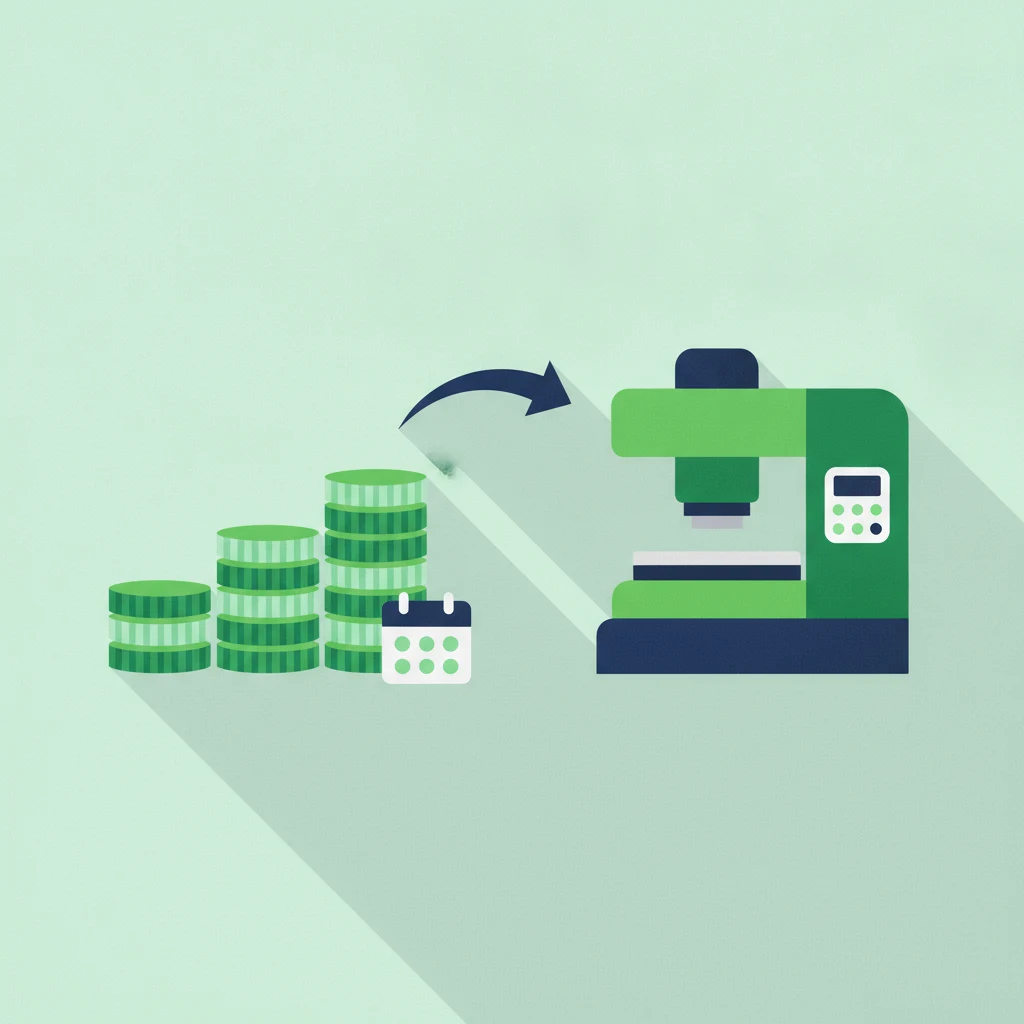
Buying equipment outright can drain the cash a growing business needs for payroll, inventory, and unexpected bills. Equipment financing solves that problem by letting you put the gear to work now and pay for it over time. This guide walks through exactly how it works — in plain English — so you can decide whether it fits your situation and compare offers with confidence.
What equipment financing actually is
Equipment financing is any arrangement that lets you acquire a business asset — a vehicle, a commercial oven, a CNC machine, medical gear, a dump truck, software-bundled hardware — without paying the full price upfront. Instead, you make fixed payments over a set term while you use the equipment to generate revenue.
The defining feature is that the equipment itself usually serves as collateral. Because the lender can repossess the asset if payments stop, equipment financing is considered "secured" lending. That security is good news for the borrower: it often means easier approval and better rates than an unsecured loan of the same size, because the lender's risk is lower.
FinanceToad is an independent comparison platform — not a lender. We don't issue loans or guarantee approval. Our job is to help you understand the landscape and line up offers side by side. Every rate and figure below is an illustrative example, not a quote.
Loan vs. lease, in plain terms
There are two broad ways to finance equipment, and the difference comes down to ownership.
- An equipment loan means you're buying the asset. You (or your business) hold the title from day one, the lender places a lien on it, and once you finish paying, the lien is released and you own it free and clear. You take on the asset — and its eventual resale value or obsolescence.
- An equipment lease means you're paying to use the asset for a term. A leasing company owns it; you make payments and, depending on the lease type, you may have the option to buy it at the end (for a token $1 or for its fair market value), return it, or upgrade.
Neither is automatically "better." Loans tend to win when the gear has a long useful life and you want to own it. Leases tend to win when technology changes fast or you only need the equipment for a while. We unpack this fully in our guide to equipment financing vs. leasing.
How lenders structure a deal
Once you understand ownership, the rest of the structure comes down to four levers. Adjusting one almost always moves the others.
Down payment
Many equipment loans ask for 0% to 20% down. A larger down payment lowers the amount financed, reduces your monthly payment, and can earn a better rate because the lender has less at stake. Some programs — especially for established businesses or "easy to resell" equipment like trucks — offer little to no money down.
Term length
The term is how long you have to repay, typically 2 to 7 years. A good rule of thumb: match the term to the useful life of the equipment. Financing a 10-year machine over 3 years strains cash flow; financing a 3-year laptop fleet over 6 years means you're still paying for gear you've replaced.
Rate
Your cost of borrowing shows up as an interest rate or factor, and it's driven by your credit profile, time in business, the equipment type, the down payment, and the term. Stronger borrowers and easily resold assets get the sharpest pricing. Always look at the APR and the total cost of the deal, not just the monthly payment — a low monthly often hides a long term and a higher total. Our walkthrough on how to compare equipment finance offers shows how to normalize quotes.
The equipment as collateral
Because the asset secures the deal, the lender cares a lot about what you're buying. Standardized, in-demand equipment that holds value (vehicles, construction gear, restaurant equipment) is easier to finance than highly specialized or fast-depreciating items. New equipment generally finances more easily than used, though plenty of programs handle both.
Typical terms by situation
Real offers vary widely. The table below shows illustrative ranges to set expectations — not quotes.
| Borrower situation | Typical down payment | Typical term | Relative rate | Notes |
|---|---|---|---|---|
| Established business, strong credit | 0%–10% | 3–7 yrs | Lowest | Often qualifies for $0-down programs |
| 2+ years in business, fair credit | 10%–20% | 2–5 yrs | Moderate | Down payment offsets risk |
| Startup (under 2 yrs) | 10%–25% | 2–4 yrs | Higher | Personal credit weighs heavily |
| Used or specialized equipment | 10%–20% | 2–5 yrs | Higher | Resale value affects approval |
Who equipment financing is a good fit for
Equipment financing tends to make sense when:
- The equipment generates revenue or saves costs — it can help pay for itself.
- You want to preserve working capital for payroll, marketing, or emergencies.
- You'd rather make predictable fixed payments than a large one-time purchase.
- You want to build business credit by responsibly servicing a secured loan.
- The purchase may qualify for tax advantages — see our overview of the Section 179 equipment tax deduction for 2026. (Always confirm specifics with your own tax professional.)
It's a weaker fit when you can comfortably pay cash without straining operations, when the equipment will be obsolete before you finish paying, or when the total financing cost outweighs the benefit of having the gear now.
The step-by-step process
Here's what actually happens from "I need a machine" to "it's funded."
- Define the equipment and budget. Know the make, model, price, and whether it's new or used. A vendor quote speeds everything up.
- Check your numbers. Gather basic financials — time in business, annual revenue, and a sense of your personal and business credit. This helps you target realistic offers.
- Apply and get pre-qualified. A short application captures business details and the equipment cost. Many platforms can pre-qualify you with a soft credit pull (more on that below).
- Compare offers. Look at down payment, term, rate/APR, total cost, and any fees or prepayment penalties — side by side, not one at a time.
- Submit documentation. Stronger or larger deals may ask for bank statements, tax returns, or a vendor invoice. This is also when a hard credit pull typically occurs.
- Sign and fund. Once approved, you sign the agreement and the lender pays the vendor (or reimburses you). The equipment ships, and your payment schedule begins.
For many smaller, standard purchases, this can move from application to funding in a few business days.
Soft pull vs. hard pull — why it matters
A soft credit pull (or soft inquiry) checks your credit without affecting your score. It's commonly used for pre-qualification, so you can see likely terms before committing. You can typically gather several soft-pull pre-quals without any score impact.
A hard credit pull (hard inquiry) happens when a lender formally evaluates you for a final decision. It can shave a few points off your score and stays on your report for about two years. The practical takeaway:
- Shop and compare using soft-pull pre-qualifications first.
- When you're ready to commit, cluster your hard pulls into a short window. Credit-scoring models often treat similar inquiries made within a focused period as a single shopping event, limiting the impact.
Common mistakes to avoid
- Chasing the lowest monthly payment. A low payment stretched over a long term can cost far more overall. Compare total cost and APR.
- Ignoring fees and prepayment penalties. Origination fees, documentation fees, or penalties for paying early can change which offer is actually cheapest.
- Mismatching term to useful life. Don't finance short-lived equipment over a long term, or vice versa.
- Overlooking the lease-vs-loan tax difference. Ownership and structure affect how you can deduct costs. Loop in a tax pro.
- Triggering multiple hard pulls over weeks. Spread-out hard inquiries hurt more than a tight shopping window.
- Skipping the fine print. Know exactly what happens at the end of the term — especially with leases — and whether the rate is fixed.
The bottom line
Equipment financing lets you put revenue-generating gear to work today while spreading the cost over its useful life, with the equipment usually serving as collateral. The smartest borrowers separate the structure (loan vs. lease), the four levers (down payment, term, rate, collateral), and the process (soft-pull shopping, then a focused hard-pull commitment) — and they always compare the total cost, not just the monthly payment.
When you're ready to see how different structures stack up for your specific purchase, you can compare equipment financing offers on FinanceToad and review the numbers side by side at your own pace.
Keep reading
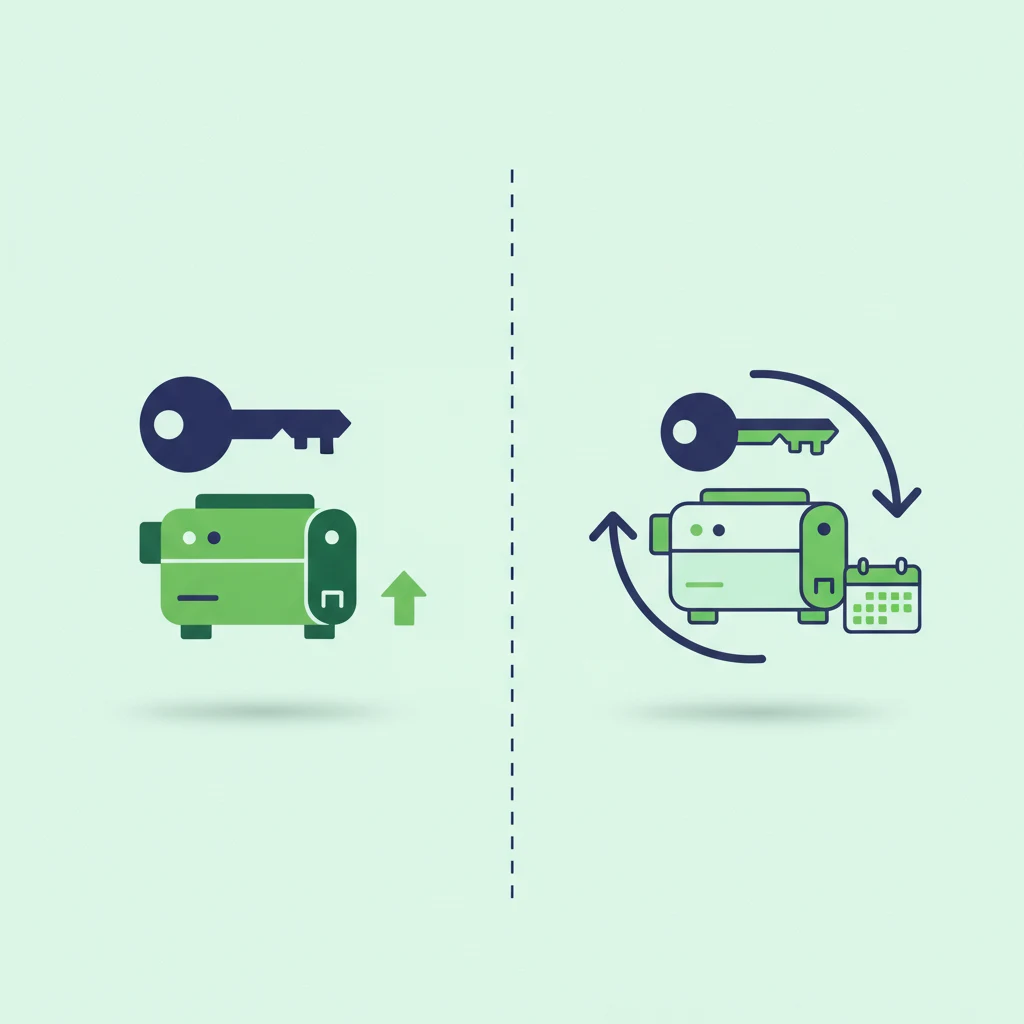
Equipment Financing vs. Leasing: Which Is Right for Your Business?
Equipment financing vs. leasing explained: loans, $1-buyout and FMV leases, EFAs, tax and ownership trade-offs, plus a total-cost comparison and checklist.
Jun 18, 2026
Section 179 & Bonus Depreciation: Equipment Tax Write-Offs for 2026
A plain-English guide to Section 179 and bonus depreciation in 2026 — including how financed equipment still qualifies and a worked tax-savings example.
Jun 14, 2026
How to Compare Equipment Finance Offers: APR, Factor Rates & Hidden Fees
Two equipment finance offers with the 'same rate' can cost thousands apart. Learn APR vs factor rates, hidden fees, and how to compare total cost the right way.
Jun 10, 2026