
Section 179 & Bonus Depreciation: Equipment Tax Write-Offs for 2026
A plain-English guide to Section 179 and bonus depreciation in 2026 — including how financed equipment still qualifies and a worked tax-savings example.
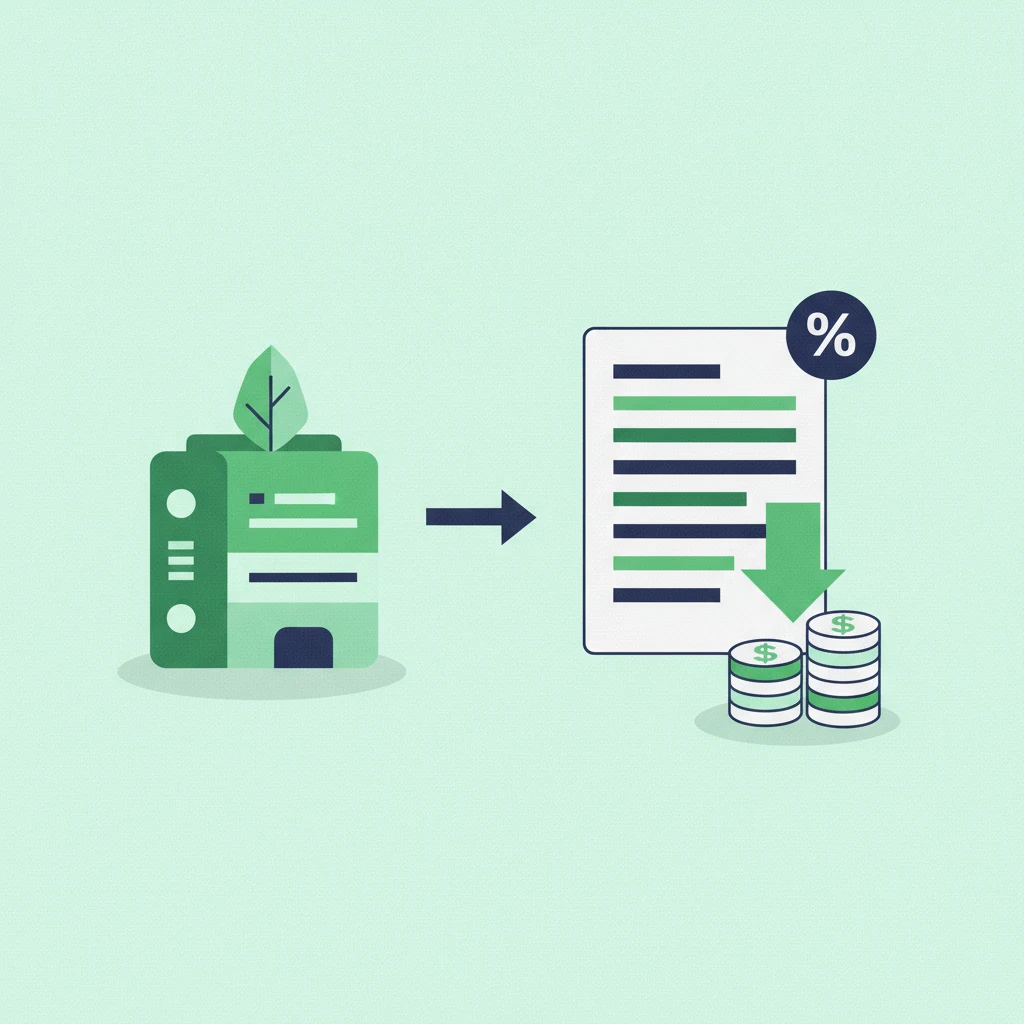
Buy a machine, deduct the cost, lower your tax bill. That's the headline promise of Section 179, and for a lot of small businesses it's one of the most valuable tools in the tax code. But the details matter — how much you can deduct, what qualifies, how it interacts with bonus depreciation, and the surprising fact that you don't even have to pay cash to claim it.
This post is educational, not tax advice. We'll explain how these write-offs work in plain English, but every business is different. Always confirm current-year limits and your specific eligibility with the IRS or a licensed CPA before you act.
What Section 179 actually is
Normally, when you buy a piece of business equipment, the IRS doesn't let you deduct the whole cost in year one. Instead you depreciate it — spreading the deduction across the asset's useful life, often five to seven years. A $50,000 machine might give you only a few thousand dollars of deduction in its first year under standard depreciation.
Section 179 changes that. It's an election that lets you deduct the full purchase price of qualifying equipment in the year you put it into service, instead of dragging the write-off out over many years. The benefit is timing: you get the tax savings now, when the cash outlay (or financing payment) is hitting your books, rather than waiting years to recover it through depreciation.
A few important guardrails come with Section 179:
- It can't create a loss. Your Section 179 deduction is limited to your business's taxable income. You can't use it to push your business into the red; any excess generally carries forward to future years.
- There's an annual dollar cap. For 2026, the Section 179 deduction limit is around $2.5 million, with a spending phase-out that begins near $4.09 million of equipment placed in service. Above that threshold, your maximum deduction shrinks dollar-for-dollar. Always confirm the current-year figures with the IRS or your CPA — these numbers are indexed and can change.
- It's per business, not per asset. That cap applies to your total qualifying purchases for the year, not to each individual item.
How bonus depreciation is different
People often lump Section 179 and bonus depreciation together, but they're separate provisions that work differently.
| Feature | Section 179 | Bonus depreciation |
|---|---|---|
| What it does | Lets you expense the full cost up front | Lets you deduct a percentage of cost up front |
| Annual dollar cap | Yes (around $2.5M for 2026) | No per-year dollar cap |
| Income limitation | Yes — can't create a loss | No — can create or increase a loss |
| Phase-out on spending | Yes (begins near $4.09M) | No spending phase-out |
| You choose item by item | Yes — flexible, asset by asset | Generally applies to whole asset classes |
| Order applied | Usually taken first | Applied after Section 179 |
In practice, many businesses use both. A common pattern: apply Section 179 to bring specific assets down to the level you want, then let bonus depreciation handle the rest. Because bonus depreciation can create a loss, it's sometimes the better tool when you've had a lean year. The percentage bonus depreciation allows has changed repeatedly in recent years, so the current-year rate is exactly the kind of figure to verify with your CPA before counting on it.
The part most people miss: financed equipment still qualifies
Here's the point that surprises a lot of business owners. You do not have to pay cash to take the deduction. If you finance or lease qualifying equipment (under a lease structured as a purchase), you can generally deduct the full purchase price in year one — even though you've only made a few monthly payments so far.
Think about what that means for cash flow. You put a small amount down, spread the actual cost over three or five years of manageable payments, and still claim the entire deduction now. The tax savings can effectively offset a chunk of your first-year payments. For many businesses, this is the single most compelling reason to finance rather than drain cash reserves.
A few things to keep straight:
- This applies to equipment financing and capital leases structured as a purchase, where you're treated as the owner. A true operating lease (a rental) is treated differently — you'd typically deduct the payments instead. The distinction matters, so read your agreement and ask your CPA which type you have. We break the structures down in equipment financing vs leasing.
- The deduction is based on the equipment's cost, not on how much you've paid down. Interest you pay on the loan is generally a separate deductible business expense.
- If you're new to how these arrangements are structured, our overview of how equipment financing works walks through the mechanics.
A worked example (illustrative only)
Let's put numbers on it. Suppose your business buys a $75,000 piece of equipment in 2026, finances it, and puts it into service before December 31. Assume — purely for illustration — a combined marginal tax rate of 24%.
| Line item | Amount |
|---|---|
| Equipment cost (placed in service 2026) | $75,000 |
| Section 179 deduction claimed | $75,000 |
| Assumed marginal tax rate | 24% |
| Estimated first-year tax savings | $18,000 |
| Net cost of equipment after tax savings | $57,000 |
In this scenario, a $75,000 machine effectively costs about $57,000 after the write-off — and because you financed it, you didn't have to part with $75,000 in cash to get there. You made a modest down payment, you're spreading the rest over the term, and you captured the full deduction in year one.
These figures are illustrative. Your actual savings depend on your real tax rate, your taxable income, the current-year limits, whether the asset fully qualifies, and how Section 179 interacts with bonus depreciation in your return. A CPA can run your specific numbers.
What qualifies — and what doesn't
The deduction is meant for tangible business assets you actually use to run your operation. The core test: the property must be used for business more than 50% of the time, and it must be placed in service by December 31 of the tax year you're claiming.
| Generally qualifies | Generally does NOT qualify |
|---|---|
| Machinery and production equipment | Land |
| Business vehicles (with weight/use rules) | Buildings and permanent structures (with exceptions) |
| Computers, servers, printers | Inventory held for resale |
| Off-the-shelf business software | Property used 50% or less for business |
| Office furniture and fixtures | Equipment received as a gift or inheritance |
| Certain qualified improvements to interiors | Property bought from a related party |
| Tools and shop equipment | Assets placed in service after year-end |
Vehicles deserve a special note: there are specific rules and caps for cars, SUVs, and trucks depending on weight and business-use percentage, and they change often. Don't assume a vehicle behaves like a generic piece of equipment — check the current rules.
Common mistakes to avoid
- Missing the placed-in-service deadline. Ordering in December isn't enough. If it's not installed and usable by year-end, the deduction usually slides to next year.
- Forgetting the income limitation. Section 179 can't create a loss. If your business had a thin year, you may not be able to use the full deduction — though it can carry forward.
- Letting business use slip below 50%. If business use drops under the threshold in a later year, you may have to recapture part of the deduction and report it as income. Keep good usage records.
- Assuming last year's limits still apply. The caps, phase-out thresholds, and bonus depreciation percentage get adjusted. Working from an outdated number can blow up a tax plan.
- Confusing lease types. Whether you can expense the equipment or only deduct payments depends on how the lease is structured. Confirm which one you signed.
- Skipping the CPA. Every point above has edge cases. A short conversation with a tax professional is cheap insurance against an expensive mistake.
The bottom line
Section 179 and bonus depreciation can turn a major equipment purchase into a meaningful, front-loaded tax deduction — and the best part for cash-conscious owners is that financed and leased equipment can still qualify, letting you claim the full write-off while paying over time. The headline figures for 2026 — roughly a $2.5M deduction limit with a phase-out near $4.09M — are generous, but they change, and the eligibility details have real teeth.
So treat this post as a map, not a verdict. This is education, not tax advice. Confirm the current-year limits and your specific situation with the IRS or a licensed CPA before you file. If you're weighing whether to finance that next piece of equipment, you can also explore the Section 179 angle alongside your financing options and read up on the broader picture.
Ready to see what financing a qualifying purchase might look like? Compare equipment finance offers on FinanceToad and put real numbers next to the tax math — no pressure, no obligation.
Keep reading
How Equipment Financing Works: A Plain-English Guide for Business Owners
Learn how equipment financing works in plain English: loans vs. leases, deal structure, typical terms, the step-by-step process, and mistakes to avoid.
Jun 22, 2026
Equipment Financing vs. Leasing: Which Is Right for Your Business?
Equipment financing vs. leasing explained: loans, $1-buyout and FMV leases, EFAs, tax and ownership trade-offs, plus a total-cost comparison and checklist.
Jun 18, 2026

How to Compare Equipment Finance Offers: APR, Factor Rates & Hidden Fees
Two equipment finance offers with the 'same rate' can cost thousands apart. Learn APR vs factor rates, hidden fees, and how to compare total cost the right way.
Jun 10, 2026